
How Interstates Forecasts Every Job — and Gives Cross-Country Movers Three Weeks' Notice Instead of Three Hours.
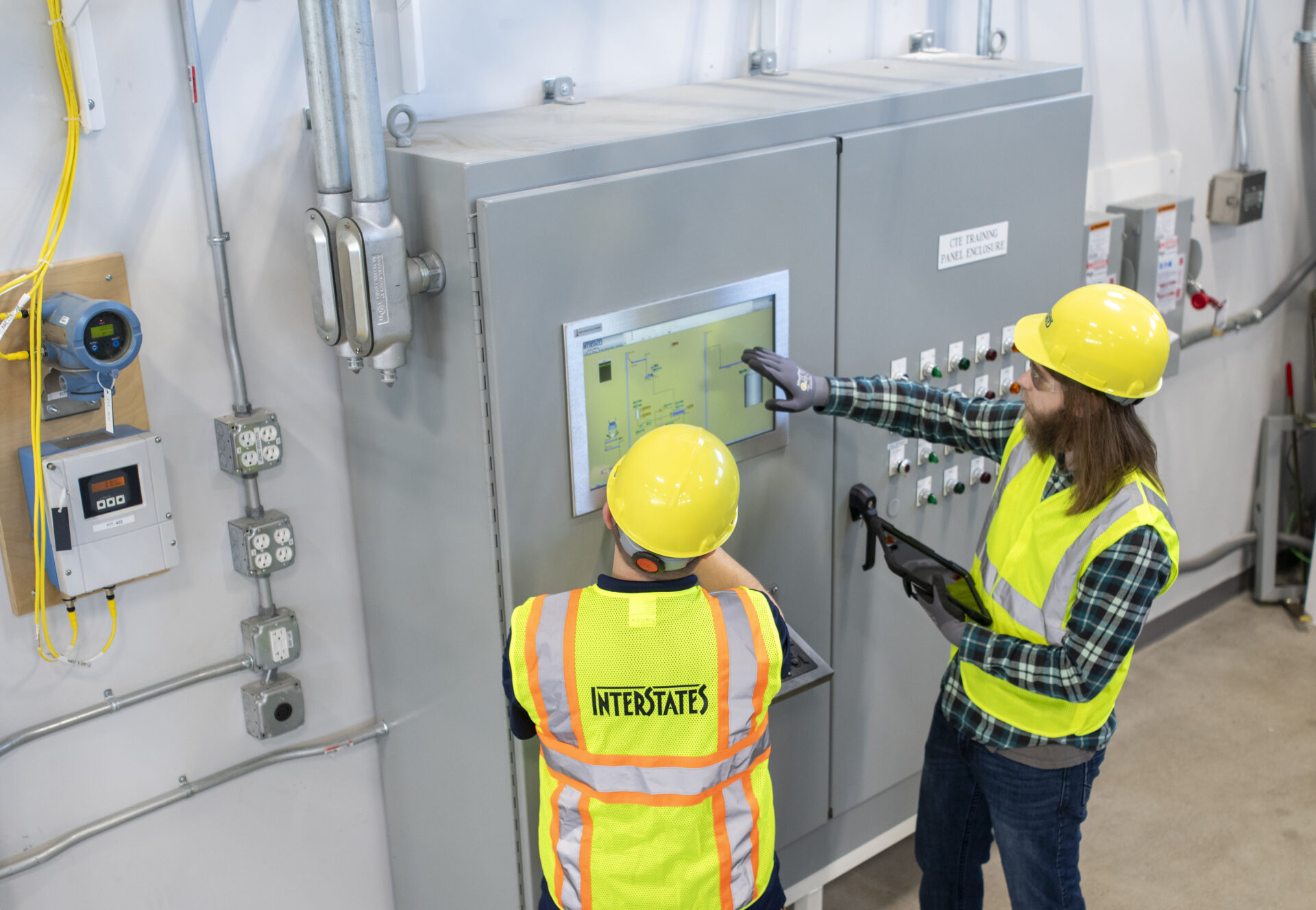
Give me the CliffsNotes version of who you are and the company. Jeremy Oliver, senior technologist with Interstates, in our innovation group. Andrew Aker, workforce manager — mostly workforce operations. Interstates is based out of Iowa and operates nationwide. We do electrical construction, automation, engineering, and fabrication. We're close to about 1,800 full-time employees across 11 or 12 regional locations, plus a traveling group that operates anywhere in the lower 48.
What does it mean to have visibility into a workforce that size, spread across that geography and project scope? Having that visibility gives us the capability to make big decisions that affect the future of the company. We know who we have, where we have them, how long they're going to be there, and where all the gaps are that can be filled. When prospective work comes in the door, we can quickly assess: does it fit the time frame, can we meet the licensing and credentialing needs. We have enough time to work through those issues ahead of time so that by the time the project arrives, we can meet them.
How does RIVET fit in? We forecast in RIVET. All of our field personnel are scheduled there — any job they're on, we schedule them. We also forecast every current and prospective job, so we know, based on the project timelines and sizes, what our labor demand is and where it lines out on a calendar.
You forecast all your projects? Every one of them. Why is that important? Why wouldn't you? People say their people will never do it. In my position I couldn't sleep at night if I didn't — I'd always be worrying about the decision that's made: can we actually do it or not. It's peace of mind. So you're not pursuing work unless it fits your labor forecast — typically. Sometimes there are directives to pursue, but then we know where we sit. It influences our hiring needs — I can go to recruiting and know what we need to hire, when, and what credentials. It informs training and onboarding capacity, what we need when we bring on more apprentices, the capacity of our instructors. That forecast affects everything down the line.
What would you say to somebody who doesn't forecast their projects? How high is your blood pressure? I couldn't do this job without it, so I wouldn't want to do this job without it. From an innovation perspective, we look at that forecast to understand the impact a project will have based on our project mix — small, medium, large, extra-large. We've found that extremely valuable.
Tell me about your labor planning team. Regional offices have local pools and are responsible for planning and deploying those folks; they also use RIVET. With our traveling group — about 350 full-time, flexing up to around 550 — we have a small team. I focus on the forecast and forward-looking items. We have two workforce planners, split by job type: one focuses on the data center lane, which is demanding with a lot of certification and compliance, and another on the rest of the projects. Then a workforce coordinator does the rubber-meets-the-road work — dispatching, lining up screenings and backgrounds, making sure trainings are assigned. That's the team for about 1,500 to 2,000 employees.
Do you hear less from job sites about people they didn't need or request? Oh, yeah, by far. Using RIVET, we communicate that really well — they can see what's coming. Very rarely do we get Friday-afternoon fire drills. Our goal with project teams is to forecast all the way to the end of the job, lock a four-week look-ahead, and firm up three weeks out. When our employees travel and may be at a job 12 months before uprooting across the country, we want to give them at least 3 to 4 weeks to plan the move. The reactive things still come up, but we can react quickly — I pull up the map: who's closest that fits the need.
Is labor your greatest risk or advantage? There's extreme comfort in understanding where your labor is and what you can allocate. If it's unknown, you're not sure if you can take on that project or if it's staffed appropriately. Do you have an advantage versus other contractors? I think we do — we've got the tools that help us deliver on what we say we're going to do. If we can see a cliff coming, or know work will accelerate, we can adapt and plan quickly. We don't have a bench; our goal is utilization across the board, keeping people working.
Does it impact your employees' experience? Everybody wants more notice. The difference between three weeks' notice on a move versus three hours. That ties into our family core value — giving people as much notice as we can about when they'll uproot their family and move across the country.
"One Interstates, one workforce, one company" — how did RIVET play into that? Before, we were technically several companies under one parent, and even on the construction side it felt fragmented — regional offices in their own silos. RIVET has helped promote collaboration and teamwork across the organization. Our regional and project managers have visibility into what the other groups are doing. If Texas is swamped and the national traveling group has capacity, we can shift people to Texas instead of hiring up and then not having enough work to keep them.
If you graded labor planning before RIVET, 0 to 100%, where were you? Probably 50 to 60%. What we could do was pretty good, but it was extremely manual and not consistent across the organization. After these tools, where are you today? Probably a 75, because we've got a long way to go — the tool is enabling us, but we're still not utilizing it to its full potential, and we have internal processes to adjust. It's a continuous-improvement game; I don't think perfect is achievable.
Did RIVET help you get 1% better? Many, many percent better. My favorite part is the people — there aren't many companies that will listen to their users and implement changes for the better. The support is fantastic; I reach out on chat or email and generally have a response within the hour, where a prior vendor took days or weeks with canned answers. An electrical contractor sits down at a bar — what do you tell them about RIVET? First I'd ask how they're doing labor planning today. I don't think there's anything else out there that gives you the insight we get with this tool, or that has the people RIVET has. If you're not using it — I don't know how I'd do this job without it.
Was there a job RIVET helped you save money on? The tool gives us the cues to have the critical conversations and fix a problem before it becomes one. Every schedule gets compressed because nothing falls on time. If a schedule slips and we send people in 50% productive because the work isn't ready, we've probably lost $65,000 to $80,000, and it sets a bad tone for the job. When we catch those things early enough, they save money.
THE CHALLENGE
Interstates was built on a powerful idea — "one Interstates, one workforce, one company." But living that at scale is hard. With roughly 1,800 employees spread across 11 to 12 regional locations and a national traveling group operating across the lower 48, the company had historically run as several businesses under one parent. "It felt very fragmented," said Jeremy Oliver, Senior Technologist in the innovation group. "Our regional offices kind of operated independently, in their own little silo."
Labor planning was strong in pockets and inconsistent everywhere else. "I probably would have said we were 50 to 60%," Oliver said of the company’s pre-RIVET grade. "The labor planning we did was pretty good, but it was extremely manual, took a lot of effort, and wasn’t consistent across the organization." Workforce Manager Andrew Aker, who spent years in the field, remembers the symptom well: "There were times I’d have people show up to the job site Monday morning that I had no idea were coming."
For a company whose people travel the country — often on a job for 12 months before uprooting to the next — fragmented planning isn’t just inefficient. It collides with a core value: family.
"Having that visibility gives us the capability to make big decisions that affect the future of the company. We know who we have, where we have them, how long they’re going to be there, and where all the gaps are that can be filled."

OUR SOLUTION
Interstates uses RIVET to forecast every job and schedule its entire workforce — making labor a real-time, company-wide decision rather than a regional guessing game.
Forecast Every Job, Without Exception
"We forecast every current and prospective job," Aker said. "Why wouldn’t you? I couldn’t sleep at night if I didn’t — I’d always be worrying whether we can actually do it. It’s peace of mind." That forecast ripples downstream: it tells recruiting who to hire and when, what credentials they need, and what capacity training, onboarding, and the apprenticeship program must carry 12 months out.
Proactive Instead of Reactive
Interstates locks a four-week look-ahead with its project teams, firming up three weeks out. "Very rarely do we get Friday-afternoon fire drills," Aker said. When something does change, the map answers it fast: "Who’s closest to this that fits the need?" The payoff reaches the workers themselves — 3 to 4 weeks’ notice to plan a cross-country move instead of three hours, honoring the company’s family core value.
One Workforce, Truly Shared
RIVET finally made "one workforce" operational. Regional managers and PMs can see what other groups are doing, so when the Texas office is swamped and the national traveling group has capacity, Interstates shifts people in instead of over-hiring. "It’s really enabled a lot more collaboration," Oliver said.
ROADBLOCKS
Interstates is candid that the tool alone isn’t enough — process discipline still matters. "There are moments where a project comes across my desk and I hear it was awarded, and it didn’t have a forecast four months ago when we started pursuing it," Aker said. "It’s a rare occasion, but those are big surprises. It’s real important we follow our process around how we forecast and decide what jobs we pursue."
The team puts itself at about 75% today — better, but with room to run. "The tool is enabling us to get there; we’re still not utilizing it to its full potential," Oliver said. "We have some internal processes to adjust. It’s a continuous-improvement game — I don’t think perfect is achievable, so there’s always room to get better."
"There’s extreme comfort in understanding where your labor is and what you can allocate. If it’s unknown, you’re not sure if you can take on that project, or if a project is staffed appropriately."

NEXT STEPS
Interstates plans to keep closing the gap to its own high bar — adjusting internal processes so RIVET can do even more, and deepening the forecast-driven connection between recruiting, training, and the apprenticeship program. The innovation group is also using the forecast and project mix to evaluate where new initiatives will have the most impact across small, medium, large, and extra-large projects. The throughline: keep utilization high, keep people working without a bench, and give the workforce the proactive notice that lets families plan — turning labor planning into a lasting competitive advantage.

THE CLIENT
Interstates is an employee-focused contractor headquartered in Sioux Center, Iowa, operating nationwide across roughly 11–12 regional locations plus a national traveling group. With about 1,800 full-time employees, Interstates delivers electrical construction, automation, engineering, and fabrication, and is known for its “one workforce” culture and family core value.
Industry:
Electrical Construction & Automation
Location:
Sioux Center, Iowa (nationwide)
Size:
~1,800 full-time employees
Services:
Electrical construction, automation, engineering, fabrication
FAQs
Find answers to common questions about RIVET’s workforce management solutions and features.
RIVET connects directly with Spectrum, Vista, Viewpoint, Foundation, Sage, COINs, CMIC, and other major construction ERPs through pre-built integrations. We automatically sync job budgets, schedules, and worker data, eliminating double data entry. Most integrations are completed within 1-2 weeks during implementation.
RIVET is designed for construction operations teams, not tech experts. We've helped many superintendents near retirement giving them hours in the day back. Hands-on white glove training with real people ensures your team will always get the support they need.
Most contractors see immediate task-based time savings in scheduling within the first few months. Labor planning impacts and reduction in margin fade from productivity killers takes longer to show up in the numbers, but you will feel the difference.
Most contractors using RIVET have more than 50 field employees performing construction work. We work with some of the largest contractors in the country, planning and scheduling thousands of field personnel. If you're currently managing workforce scheduling with spreadsheets, whiteboards, or phone calls, and have multiple projects running simultaneously, RIVET is for you.
Your data belongs to you. RIVET provides complete data export capabilities in standard formats, and we'll work with you to ensure a smooth transition if you decide to leave.
RIVET was purpose built for electrical and mechanical contractors, and is based on the workforce management best practices of the most successful MEP contractors. RIVET is an active partner with NECA, SMACNA, and construction research organizations like ELECTRI. RIVET is focused exclusively on making labor operations efficient rather than trying to solve every construction problem.
Get Started Today
Construction labor challenges can be greatly reduced with the right software