Field Scheduling & Dispatch
WFM WORKFLOW WEBINAR SERIES
Thanks for being here! Welcome to our first RIVET Product Team Webinar Series. Welcome to the contractors currently using the RIVET Platform, and also welcome to everyone else here to learn about Field Scheduling & Dispatch.
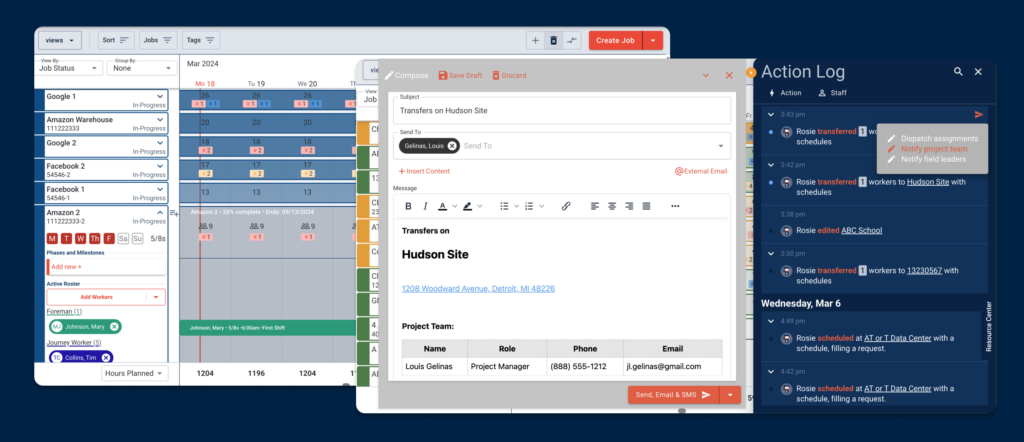
So why are we talking about Field Scheduling & Dispatch? Because it’s a critical role in construction projects. Many contractors have shifted from spreadsheets to software, but that’s just the start. RIVET can be used to schedule projects in a variety of ways and to centralize field communications.
In this training, we’re going to show you some specific workflows that give you the best business outcomes based on what we’ve seen across our user base, and we brought two expert schedulers with us to share their company examples.
Watch the recording below:
Review the training materials:
Who is this for?
This training is for anyone who cares about Field Scheduling & Dispatch in construction. We’ll get deeper into that in a little bit. But if labor is a big part of your business, then scheduling and dispatch are probably essential for your business and your jobs. This is for you.
Our mission at RIVET is to enable every self-performing contractor to have a labor plan that they can execute against that improves their bottom line.

Defining Scheduling & Dispatch
We define Scheduling as: How you balance individual availability across projects.
Without software:
- Spreadsheets or magnet boards contain out-of-date, fragmented or scattered data and are not accessible to teams until the day of labor meetings.
With the RIVET Platform:
- Real-time control to labor assignments and budgets.
We define Dispatch as: How you alert and remind applicable parties of changes.
Without software:
- Time wasted on redundant calls, emails, texts, meetings and job board photos
With the RIVET Platform:
- Automated and streamlined
Industry Outlook
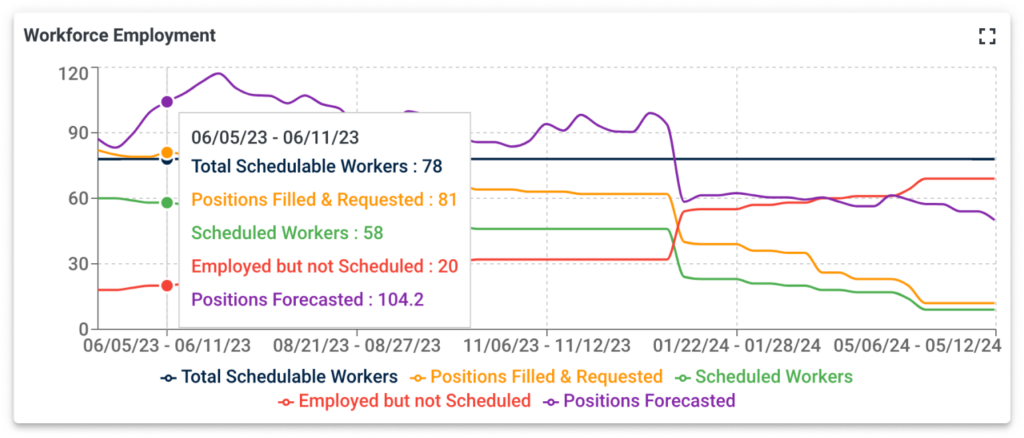
Bulk scheduling on Job Schedule view is trending highest where forecasted labor can be visualized.
We observe:
- On average – 4 unique active schedulers
- Bulk scheduling (Drawer usage) happens at the beginning
- Fine-tuning (Painting) is most common for changes

Workflow 1: Scheduling to your plan
Workflow 2: In-flight schedule adjustments
Workflow 3: Lookahead Scheduling / Labor Request Filling
Other ways to schedule in RIVET

Workflow 4: Dispatch assignments
Best Practices
1. Scheduling is a team effort.
Project Managers, Schedulers and Field Leaders are critical to effective scheduling. They are the labor planning team.
2. Schedule to your forecast.
Build the plan and schedule to it to visualize worker availability over time.
Start today.
Adopting the RIVET Workforce Management Platform can have a huge impact on your field performance and profitability.