Webinar Recap: Data Centers & Local Market Constraints


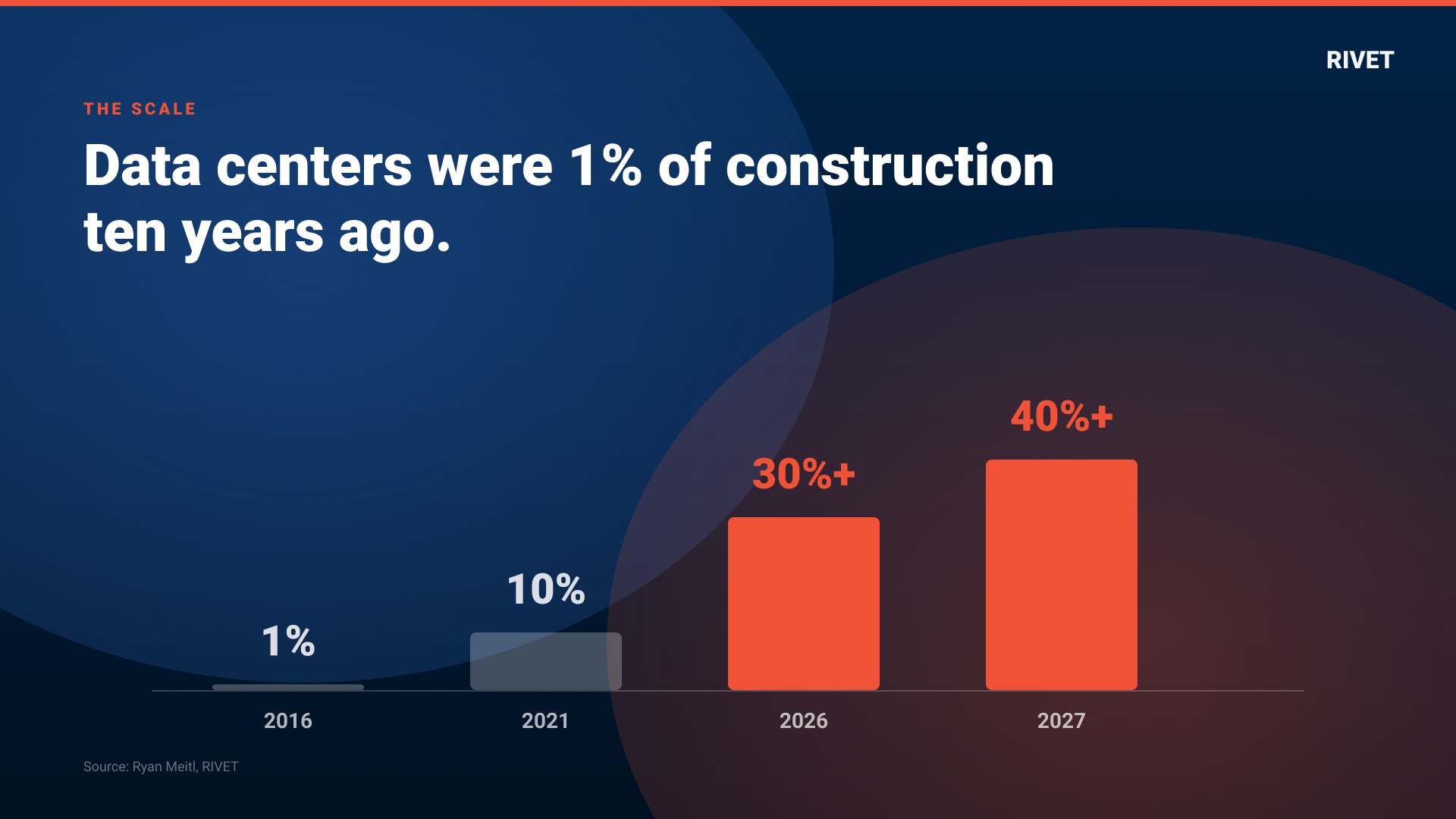
Ten years ago, data center construction was about 1% of the U.S. construction market. Five years ago it was 10%. This year it's north of 30% — and in 2026 it could cross 40% of all construction dollars. That's not a trend. It's a structural shift in where the work, and the workforce, is going.
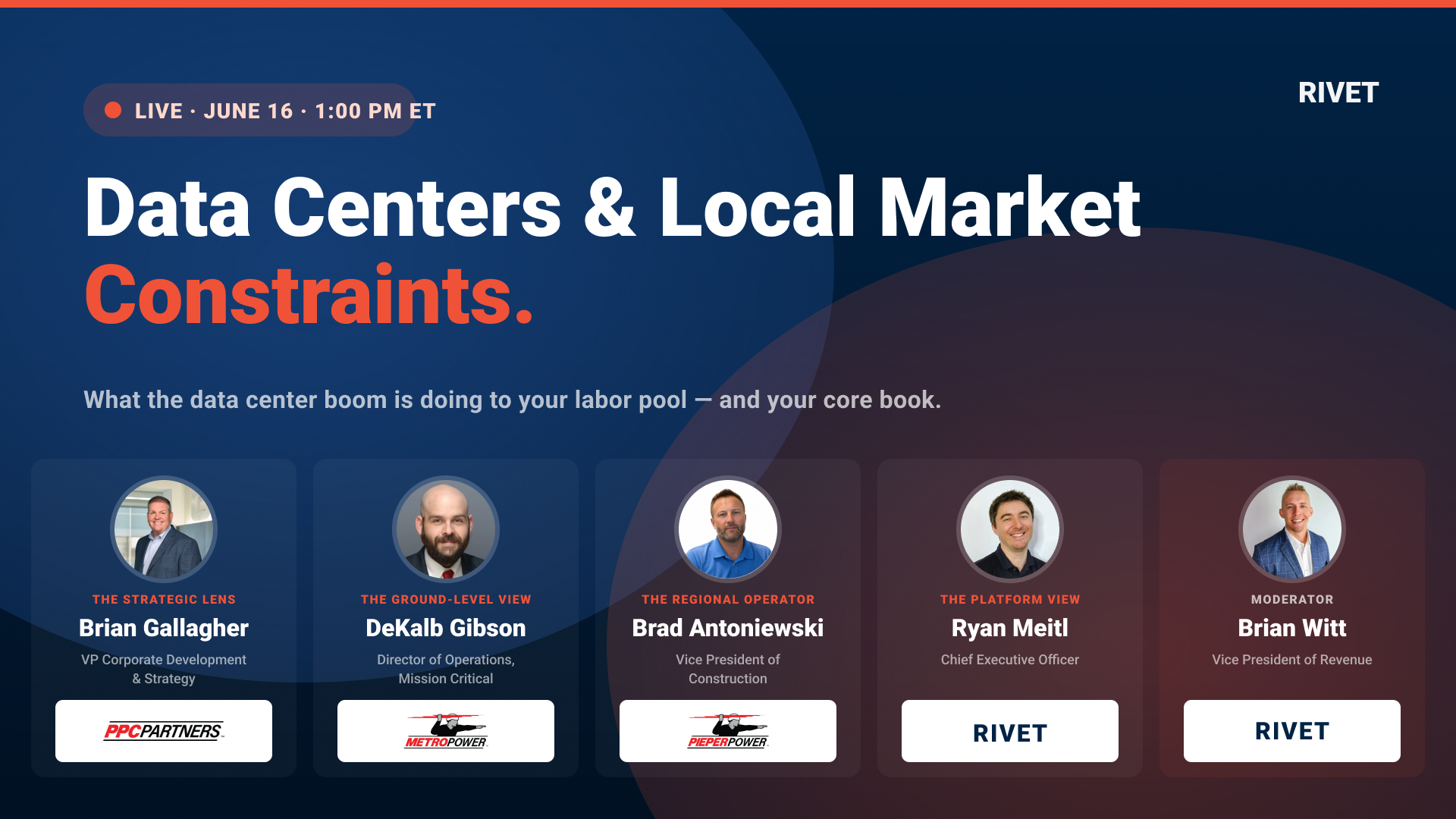
We brought together three contractors living it every day, plus RIVET CEO Ryan Meitl, for a candid panel on what the boom is doing to local labor markets. Watch the full conversation below, or read the key takeaways.
It's a wave, not a bubble — and we're still on the front of it
For years, plenty of people assumed data center demand would pop like every other construction cycle. The panel disagreed. "I used to think this was going to be a bubble. It's not a bubble," Meitl said. "We've got many years of this ahead of us."
Brian Gallagher, VP of Corporate Strategy & Development at PPC Partners, framed it as a wave still building: "I like the description of the market more as a wave, and I think we're in the early phases of what that crest looks like." He also pointed to the second swell right behind it — the generation and transmission work needed to actually power these facilities.
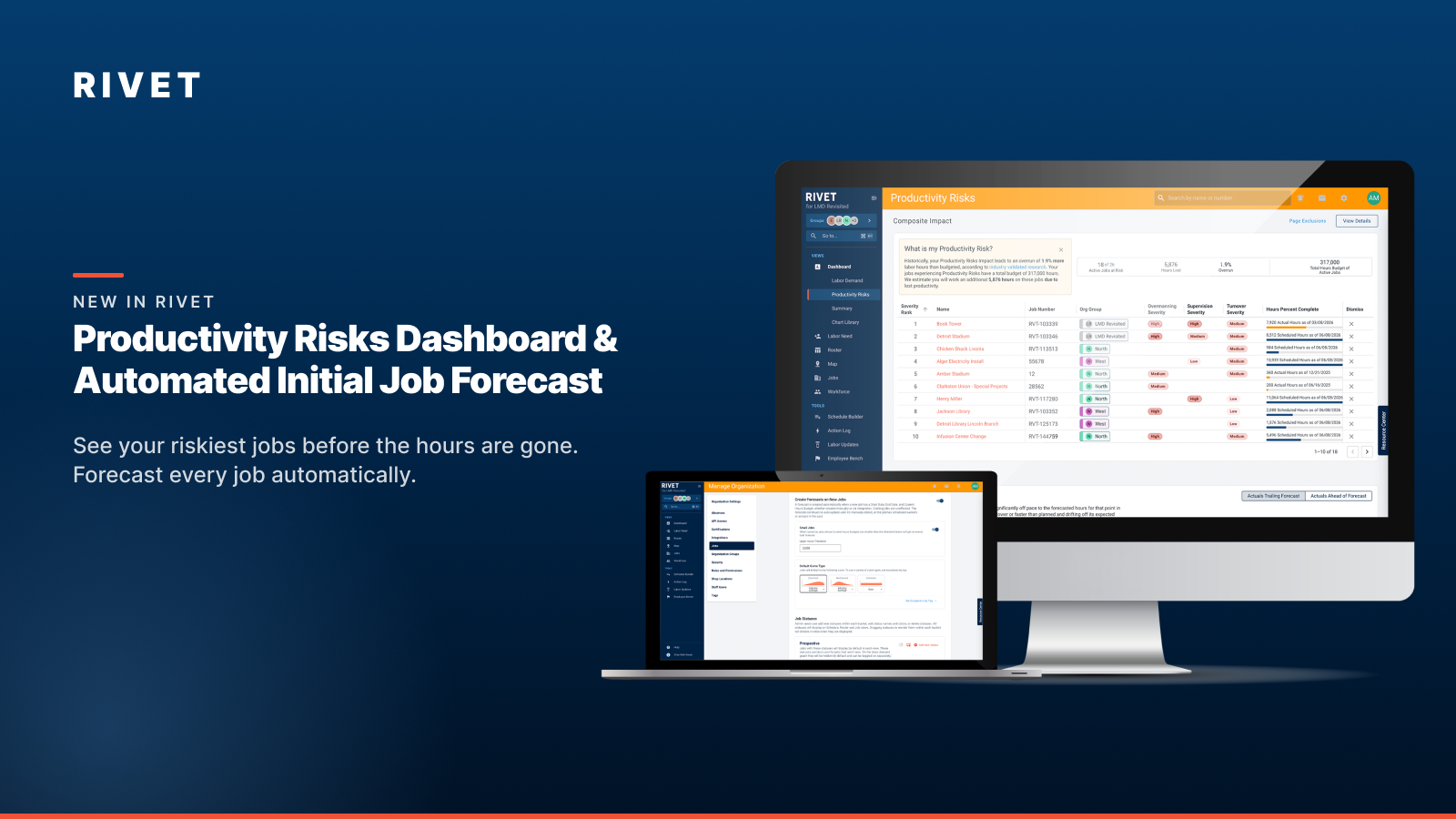
Two realities make this different from normal commercial work. The electrical scope inside a data center is a far larger percentage of the project than typical vertical construction. And these facilities get built where the power is — not in city centers with a deep local labor pool. The result is a massive traveling workforce, and a complete inversion of where that workforce sits: the talent that used to chase wages on the West Coast is now in the Midwest and Southeast. When demand is this large and durable, guessing at labor needs stops being viable — which is why contractors are moving to real workforce forecasting that shows where crews will be needed 6 months to 2+ years out.
The real risk isn't the megaproject. It's your core book of business.
Every panelist agreed the opportunity is real. So is the trap. "We knew if we weren't part of it, we'd basically be on the outside looking in," said Brad Antoniewski, VP of Construction at Pieper Electric, the union shop operating in one of the country's hottest hyperscale markets near Milwaukee. But he repeated the warning more than once: "Keeping your existing customers happy and supported is the biggest challenge and the risk right now."
DeKalb Gibson, Director of Operations for Mission Critical at MetroPower, put the mechanics plainly: a single data center "can dominate a geography, a branch, a market — pulling all of your labor into that job," especially as it ramps. The contractors who win are the ones who can take on the megaproject and still staff the hospitals, schools, and industrial clients they've served for decades — which requires seeing labor demand across every project at once so you only bid the data center work when you genuinely have the capacity to perform it.
Manpower peaks like nothing electrical construction has seen
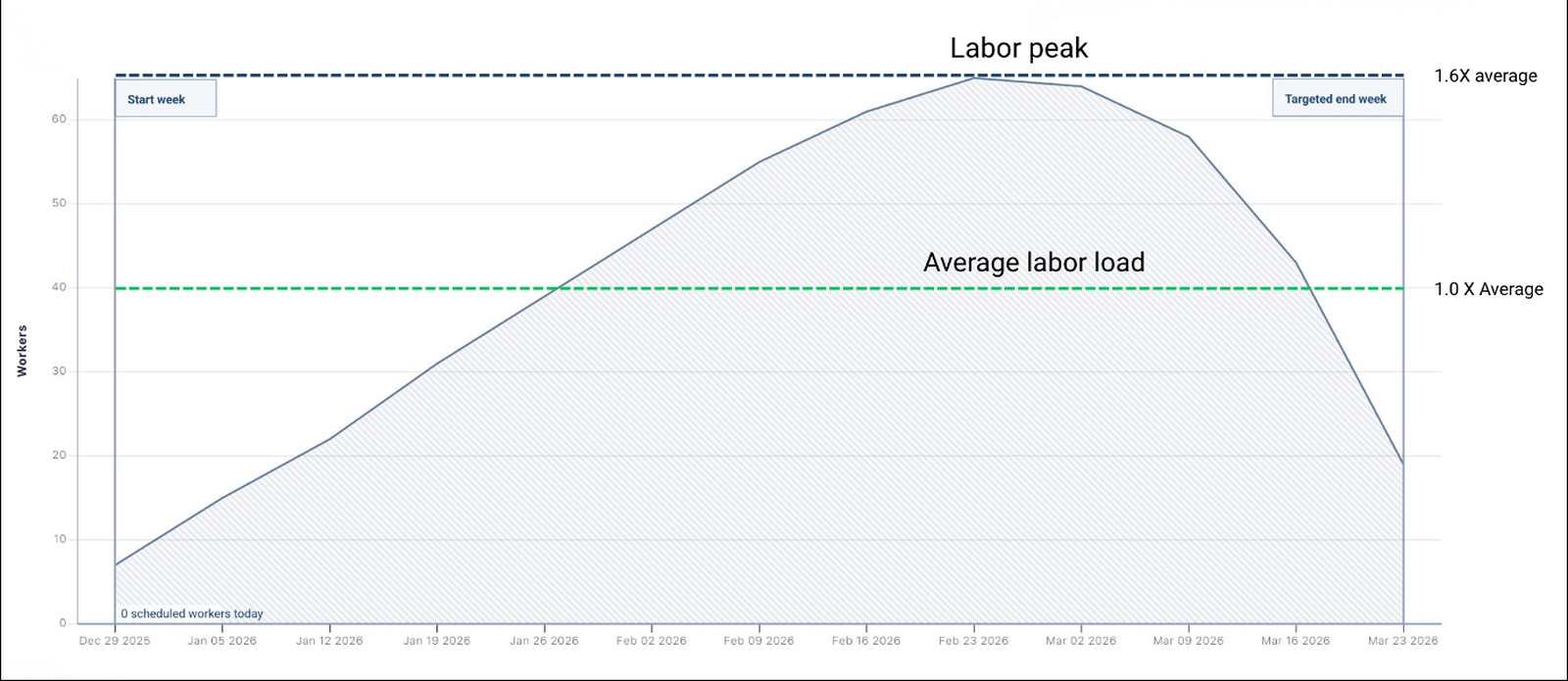
Forget the textbook bell curve. Data center labor curves spike, dip, and spike again. Antoniewski's last hyperscale project ran over 300 electricians on site at once. There's a big ramp as the building goes up, a lull, then a second spike at the end — during L3/L4 commissioning, everything has to be tested together, so the labor never tapers the way it does on a normal job.
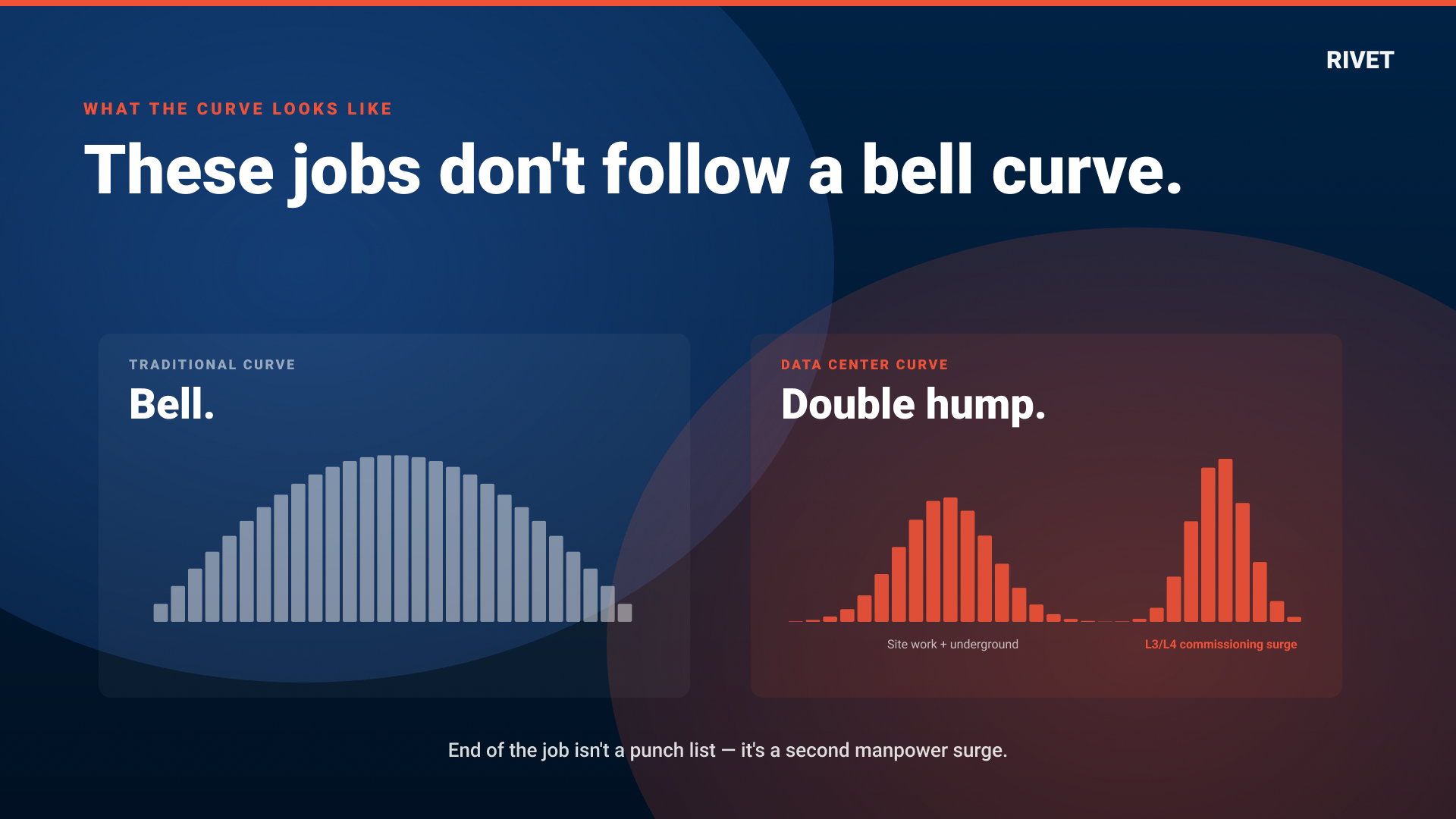
That curve also reshapes the work week. Gibson described the now-standard schedule: 50-hour weeks minimum, often a 60/60/40 rotation. "Some research shows that third 60-hour week in a row, things start falling apart," he said, "so 60/60/40 is what we try for when the job allows it."
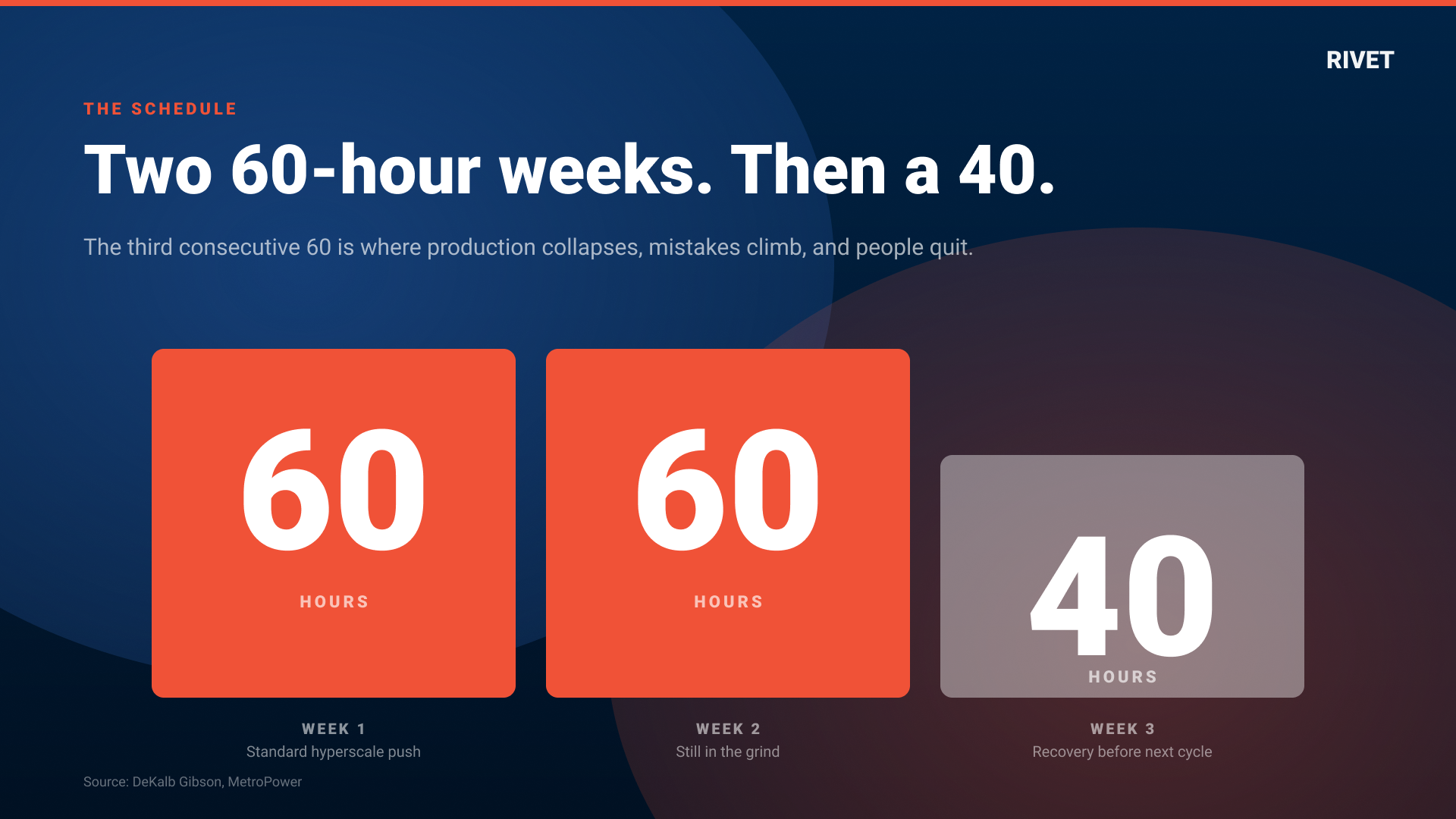
Peaks like that are where margins quietly die: overmanning, schedule compression, excessive overtime, and trade stacking all compound. The only defense is planning the curve before you're standing in it — and tracking planned vs. actual hours in real time so you catch the overrun while you can still do something about it.
Retention and field supervision are the make-or-break
When a job down the street is offering well over scale, retention becomes a survival skill. Antoniewski's take: being in the work is itself the retention strategy — "we're not seeing people leave as much because we can offer the same kind of hours and pay." But he was honest about the other side, too: plenty of good electricians don't want 60-hour weeks. "There's a lot of value to working 40 hours a week rather than 60."
That means knowing your people — who wants to chase the hours and who needs balance — and keeping apprentices cross-trained so a generation of data-center-only electricians doesn't lose the branch conduit, lighting, and fire alarm reps they'll need when the wave recedes. Gibson's single biggest takeaway cut to the core of it: "You can train project managers to manage this work. But if you don't have the right field supervision — top level and secondary level — that's where this work is make or break. If we had 40 of those guys, there'd be no shortage of work we could do."
You can't manufacture supervisors overnight, but you can stop losing them to chaos. Knowing every worker's skills, certifications, and availability on a single worker profile, and getting plans into the field cleanly, is how the best shops protect their most important resource.
Prefab moved from "nice to have" to the pressure valve
When you can't throw bodies at a schedule, you move the work off site. Data centers have made prefabrication non-negotiable. PPC Partners just put serious capital behind that shift, launching a new operating company — Integron Systems — built for advanced fabrication and modularization, including a brand-new 130,000-square-foot production facility in East Troy, Wisconsin. Gallagher noted that up to 30–40% of data center project value is now being modularized. "We see that as critically important to the data center and energy spaces," he said, "but also something with applications across every market we serve."
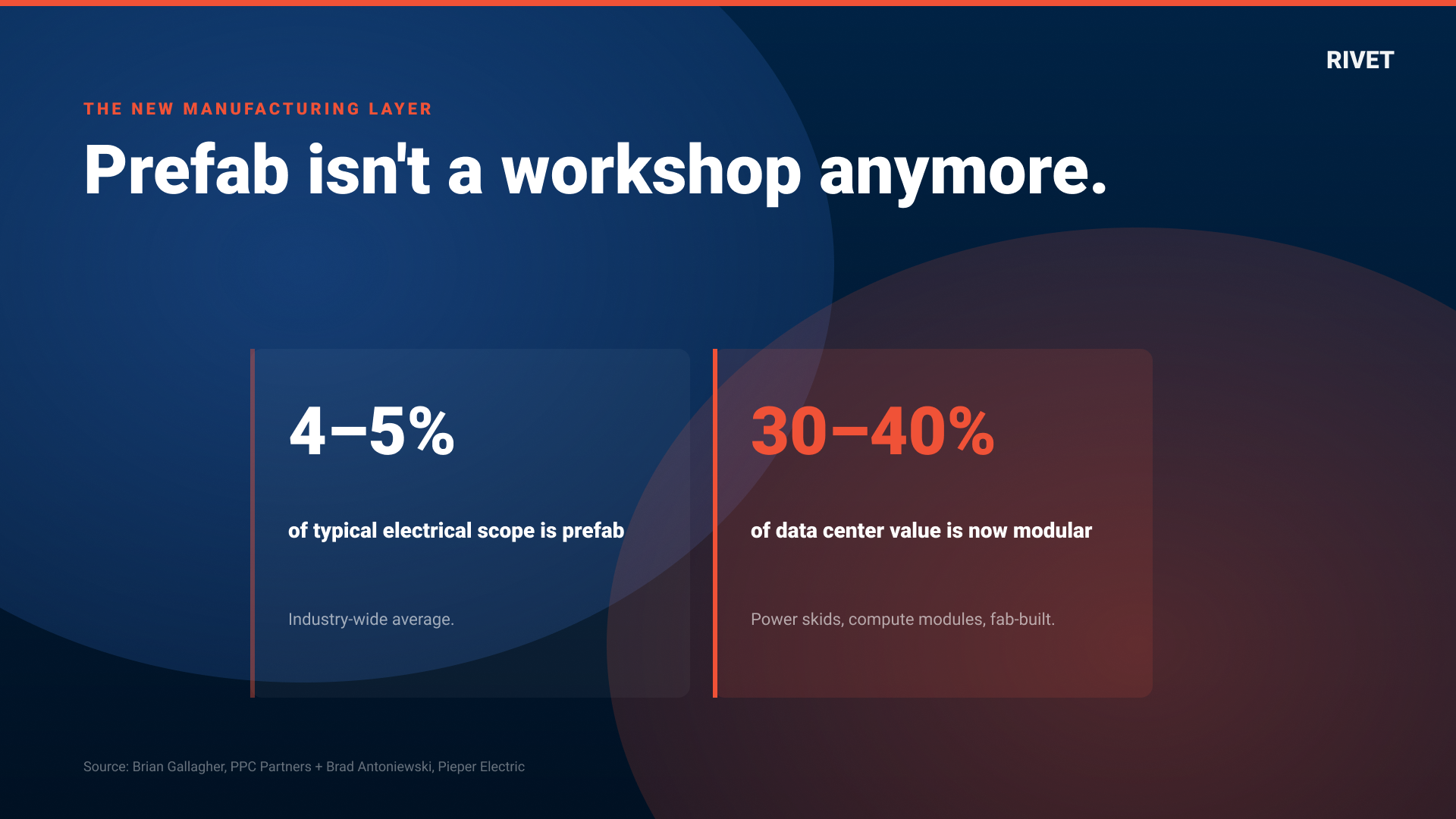
Meitl tied it back to the labor math: "The only way you're going to solve it is by figuring out how to do it somewhere else and do it faster." Prefab also relieves the geographic strain — Pieper builds an hour from the jobsite, using a different labor pool to produce, then ships the assemblies in.
The throughline: labor planning has never mattered more
Different scales, different stances — union and open shop, Southeast and Midwest — but the panel kept landing in the same place. The boom has handed contractors the biggest backlog of their careers and the tightest labor market they've ever seen, at the same time. Planning your people, retaining them, and upskilling them isn't back-office hygiene anymore. It's the difference between riding the wave and getting pulled under by it.
That's the entire reason RIVET exists. We help electrical and mechanical contractors forecast labor demand, schedule and dispatch crews across projects, and protect margin against the productivity killers that show up first on jobs exactly like these. The strain is here. So is the opportunity. See how RIVET helps you plan the curve before you're in it →
About the panel
- Brian Gallagher — VP, Corporate Strategy & Development, PPC Partners
- DeKalb Gibson — Director of Operations, Mission Critical, MetroPower
- Brad Antoniewski — VP of Construction, Pieper Electric
- Ryan Meitl — CEO, RIVET
- Brian Witt — VP of Revenue, RIVET (moderator)
Ready to ditch the chaos?
Join specialty contractors just like you who stopped accepting "that's just construction" as an excuse for losing money.