Thou Shalt Labor Plan: Webinar Recap


How Poynter Sheet Metal Built a Disciplined, Tech-Forward Labor Strategy with Rivet
In a recent SMACNA-hosted webinar, Cedric Kennedy of RIVET Work joined forces with Nathan Shinkle and Zach Piercy from Poynter Sheet Metal to tackle one of construction's most persistent challenges: labor planning. With labor often making up 50% of project costs, the group emphasized that how you plan, forecast, and manage your workforce is one of the biggest levers for project profitability — and often one of the most overlooked.
From Tracking to Planning: A Mindset Shift
Nathan, VP of Operations, opened by candidly describing Poynter's former process: a spreadsheet that was “okay at labor tracking” but left planning entirely up to foremen. Growth forced a reckoning — the company doubled its field size in a little over a year, and their outdated methods couldn’t keep pace.
Zach, VP of Sales and tech implementation champion, added that the labor plan was reactive at best. “We wouldn’t know how many field staff we had until payroll hit,” he said. That gap in visibility impacted staffing decisions, job profitability, and communication between ops and field teams.
Superintendents as Labor Managers
A recurring theme was the evolving role of the superintendent. In Cedric’s words, they were like “Sisyphus pushing the boulder uphill” — burdened with phone calls, texts, and disconnected labor requests. Nathan reframed the role: “You’re not a labor fireman. You’re a labor manager.” Using RIVET, Poynter gave their supers space to focus on strategy — looking 3, 6, even 12 months ahead, while field-level supers handled the week-to-week.
The Bell Curve: Turning Labor Plans into Google Maps
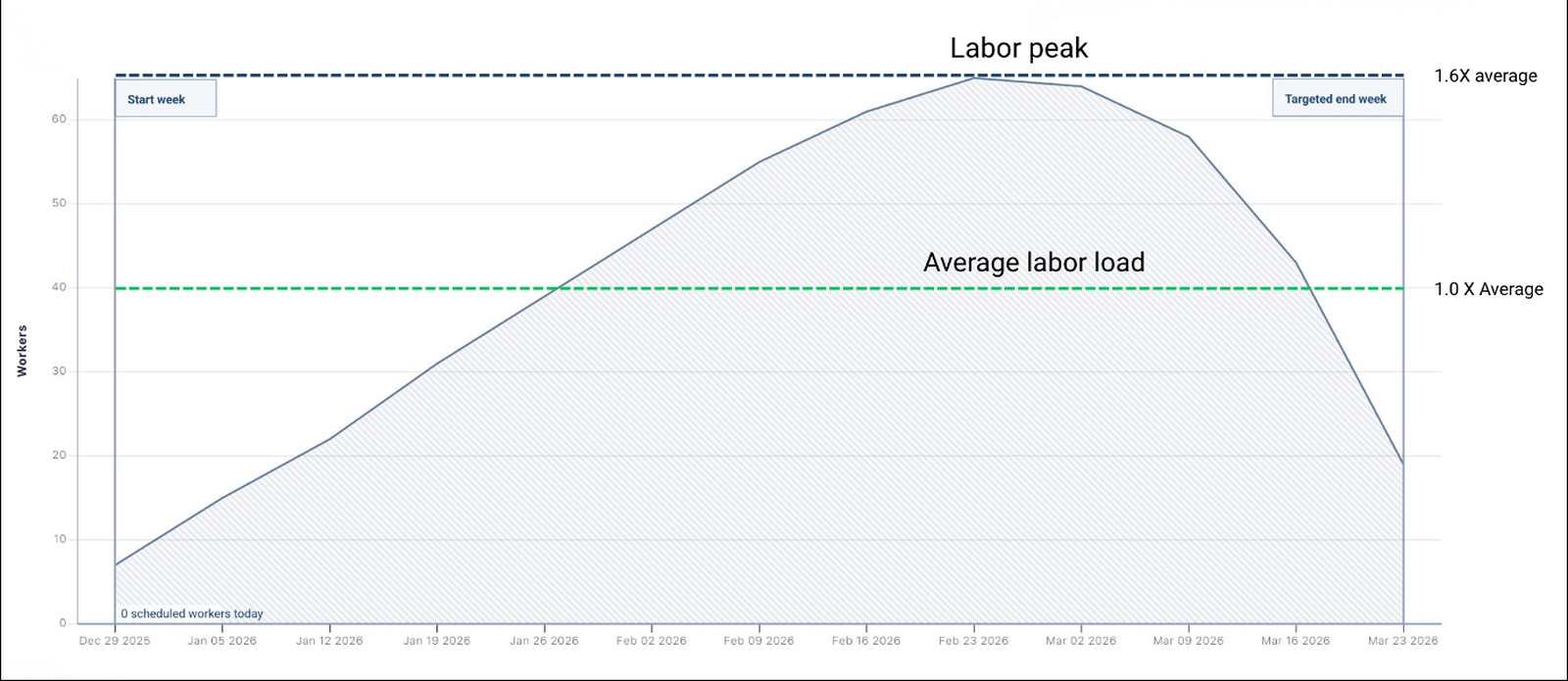
One of the most impactful takeaways came from Poynter’s new use of “labor curves” — forecasted manpower needs visualized over time.
“Think of it like Google Maps,” Nathan said. “The PM sets the route, and the field team just has to follow it. You’ll get there on time and under budget if you stay in the lines.” When plans change — and they always do — they adjust the curve and stay aligned as a team.
Zach noted that the visibility empowers foremen to let go of labor earlier, reducing the common problem of “sandbagging” good workers just in case.
Capacity Planning at Scale
With hundreds of workers and a growing backlog, Poynter also uses RIVET to view labor demand across every project in flight. This lets the ops and sales teams plan months in advance — not only for current jobs but for potential wins.
“If I can see a dip in labor 6 months out, I’ve got time to stir something up on the sales side,” Zach explained. “Before, we’d get hit by that curve and be forced into expensive overtime or rushed hires.”
Adoption Advice: Don’t Just Roll Out Tech — Build a Process
Both leaders emphasized that RIVET didn’t fix their labor chaos overnight. “It took us a full year to roll this out the right way,” Nathan said. Their secret? Clear communication, hands-on training, and strong culture around using tech as a core tool — not an optional add-on.
They trained in small groups, sold the “why” to field leaders, and replaced old tasks (like email-based two-week look aheads) with in-app workflows. “You can’t just expect software to solve your labor problems,” Zach said. “You’ve got to change your processes too.”

Key Takeaways
- Labor Planning ≠ Labor Tracking: Planning is proactive and future-focused. Tracking is backward-looking.
- Superintendents need support, not spreadsheets: Give them tools that let them manage labor, not chase it.
- Data = Decisions: Visual tools like bell curves and capacity forecasts help everyone plan better.
- Tech is only half the job: The other half is process change and internal adoption.
Watch The Webinar On-Demand
Learn how Poynter Sheet Metal is using proactive labor planning to reduce risk, align resources and win more predictable margins.
- ✅ Includes Live Q&A with top field leaders
- 📊 Real-world visuals of labor bell curves
- 🛠 Proven strategies from MEP contractors
Ready to ditch the chaos?
Join specialty contractors just like you who stopped accepting "that's just construction" as an excuse for losing money.